
|
J.
Donald R. de Raadt is a social scientist
who has held academic posts in
Australia, the United States, and
Sweden, where he served for twelve
years as Professor of Informatics and
Systems Science at Luleå
Technical University. He has also been
President of the International
Society for the Systems Sciences (USA),
President of the Swedish
Operational Research Society, and
Vice-President of the International
Federation for Systems Research in
Vienna.
After retiring from university life, he
and his wife Veronica founded
the Melbourne Centre for Community
Development, dedicated to promoting
family and community through research,
publications, and seminars. All
its services are offered without charge.
His research has focused on
designing university programmes, both
undergraduate and postgraduate,
that place science in the service of
family and community.
The Centre now conducts a doctoral
programme in Brazil, where for two
decades Donald, with Veronica’s support,
has mentored systems
scientists of the Brazilian chapter of
the International Society for
the Systems Sciences. He also guides a
Brazilian research group
committed to multidisciplinary,
systemic, and multimodal research, and
serves as Honorary Mentor of the
Multimodal Systems Group at the
Catholic University of Argentina in
Rosario.
|
|
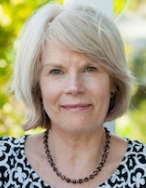
Veronica
D. de Raadt trained as a social worker
in Australia and, after
completing a master’s degree in the
United States, worked in the fields
of domestic violence and mental health.
To broaden her expertise in the
human services, she pursued doctoral
studies in Sweden, focusing on
human factors in community development
in remote communities. The
results of this research were later
published in her book Ethics and
Sustainable Community Design.
In
Sweden she also taught psychology,
sociology, and research methods at
Luleå Technical University and
contributed to EU-funded community
development projects. Together with her
husband Donald, she founded the
Institute for Management and Social
Systems in Sweden, which now
continues in Australia as the Melbourne
Centre for Community
Development. Her research has appeared
in leading systems journals and
has been presented at international
conferences across Europe and the
United States.
|

|
Sue-Lee
Seng (Bachelor of Architecture; Graduate
Diploma in Community
Development) worked as an architect from
2004 to 2011. Since 2007 she
has been active as a volunteer in
Melbourne, teaching children from
inner-city public housing estates, helping
them grow in moral
principles within a positive and
supportive environment. In 2009 she
joined a team of volunteers in China
assisting local farmers with the
potato harvest, and in 2007 she worked
with a not-for-profit
architectural organisation in the Solomon
Islands to construct latrines
after the devastation of a tsunami.
In 2011 she founded RIAH, a
community-based hairstyling business that
both provides income and raises awareness
of social needs within her
networks. She now serves as a children’s
pastor and community developer
in Melbourne.
|
|
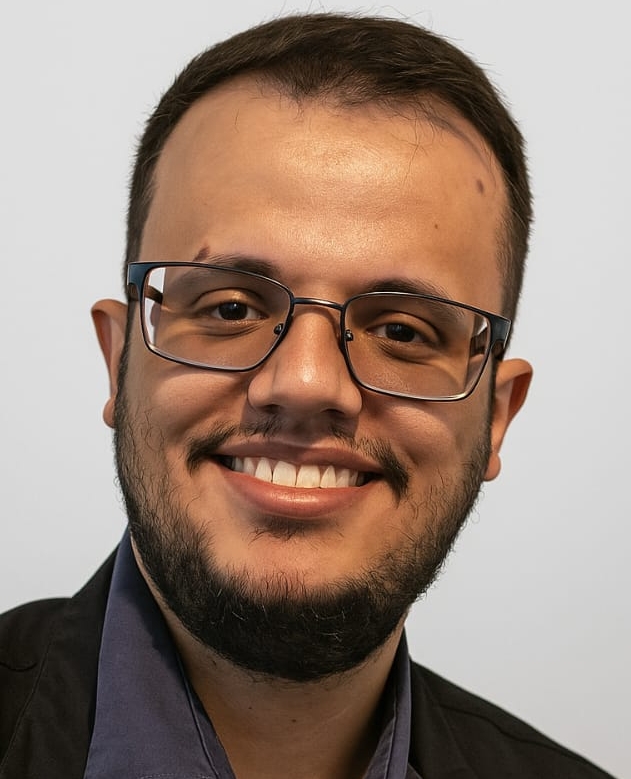
Breno
Oliveira Perdigão is a civil engineer with
professional experience in
industrial planning and renewable energy
projects. He received his
doctorate from the Melbourne Centre for
Community Development,
completing his research in the Doctoral
Programme in Multimodal Systems
Research with a thesis entitled “Community
Sustainability: Application
of Multimodal Systems Thinking in a
Neighbourhood in Brazil.”
He now serves on the Centre’s teaching
staff in Brazil, contributing to
projects that support local development
and apply systemic approaches
in community settings. Alongside his
family, he is also engaged in
family farming, developing research and
practices in food and
vocational care aimed at strengthening
communities and advancing local
sustainability. |

|
Ester
Wolff Loitzenbauer is an oceanographer
with a PhD in water resources
and environmental sanitation. She is a
professor at the State
University of Rio Grande do Sul (UERGS)
in Brazil and is involved in
education and research in water
management and river basin committees.
She is also engaged in in postgraduate
studies in multimodal systems
research at the Melbourne Centre for
Community Development.
|
|
Elisa de Bastiani Menon
graduated with a licentiate in biology
from the University
UniAmérica, Brazil, where her final
thesis — equivalent to an
Honours thesis in the Australian system
— was entitled "Application
of the Multimodal Systemic Method to an
Island Community on the
Paraná River." Her examiners awarded her
the highest grade and
recommended the work for publication in
a refereed journal. The
research drew her into direct engagement
with the island community,
working alongside its inhabitants to
address the threats posed by
river pollution to the local fish
population, upon which the
islanders depend for their livelihood.
This experience sharpened her
awareness of the urgent needs of
vulnerable communities and the role
that education and research can play in
their protection. In early
2026, she commenced doctoral studies at
the Melbourne Centre for
Community Development.
|
|
|